Showing posts with label Technology. Show all posts
Tuesday, 28 June 2016
Google CEO Sundar Pichai’s Quora Account Has Been Hacked!

Sundar Pichai isn’t going to have a happy start to his week. The CEO of Google’s Quora account appears to have been hacked by a group called OurMine, which previously broke into Facebook boss Mark Zuckerberg’s Twitter and Pinterest accounts earlier this month.
The three-man hacker outfit has been posting messages on Quora through Pichai’s account; it’s also connected to his Twitter account and as a result, OurMine was able to publicize their hack to all 508,000 of his followers. The tweets have now been removed, but we’ve got a screenshot.

OurMine has been targeting major tech execs of late, including Spotify’s Daniel Ek. It isn’t clear how the group is gaining access to their accounts, but it likely doesn’t involve system breaches of the social networks their targets have accounts with.
Instead, the group claims that it uses various exploits to pull passwords from celebrities’ browsers.
OurMine is attempting to rebrand itself as a ‘security firm' and offering its support to those it targets so that these incidents don’t occur again. It’s probably not the best way to garner your potential customers’ trust, but that’s the way OurMine seems to enjoy doing business.
We’ve contacted Google, Quora and OurMine for comment and will update this post if there’s a response.
OurMine has been targeting major tech execs of late, including Spotify’s Daniel Ek. It isn’t clear how the group is gaining access to their accounts, but it likely doesn’t involve system breaches of the social networks their targets have accounts with.
Instead, the group claims that it uses various exploits to pull passwords from celebrities’ browsers.
OurMine is attempting to rebrand itself as a ‘security firm‘ and offering its support to those it targets so that these incidents don’t occur again. It’s probably not the best way to garner your potential customers’ trust, but that’s the way OurMine seems to enjoy doing business.
“We are just testing people security (sic), we never change their passwords, we did it because there is other hackers can hack them and change everything.”
The group also noted that it managed to break into Pichai’s account by exploiting a vulnerability in Quora’s platform – one that it claims to have reported to the company, with no response.
Naturally, if you’re on Quora, you’ll want to change your password right away and make sure it isn’t the same as what you for other services.
We are confident that Sundar Pichai’s account was not accessed via a vulnerability in Quora’s systems. This is consistent with past reports where OurMine exploited previous password leaks on other services to gain access to accounts on Twitter or Facebook. We also have no record of a report by OurMine pointing to a vulnerability. We recommend that people use unique passwords for accounts on different services, so that a security breach on one service does not lead to attackers gaining access to accounts on other services. Safeguarding our users is very important to us, which makes security at Quora one of our highest priorities.
Image Source: www.google.co.in
Thursday, 19 November 2015
Cyber War: Anonymous Publishes Three Guides To Teach You “How To Hack” And Fight ISIS
Facts
,
International
,
News
,
Politics
,
Society
,
Technology
No comments
:

Encouraging the people to join the cyber-war against ISIS, hacktivist Twitter bot to uncover social media accounts of ISIS, and learning how to hack using a “NoobGuide”
The war between the hackers and terrorists is escalating quickly in the wake of the recent Paris attacks. In the short time frame of past two days , Anonymous hacktivist group has declared an open war on ISIS. In response, ISIS was quick to retaliate and called Anonymous ‘idiots’ who just know how to ‘hack email and Twitter accounts’.
In another development, Anonymous has released a series of guides urging the people to take part in their biggest ever operation called #OpParis. The guides include how-to instructions that tell the ways to hack the ISIS-affiliated websites and social media accounts.
The rivalry of ISIS and Anonymous dates back to the Charlie Hebdo massacre in January. Anonymous has continued its attacks on ISIS and already exposed more than a thousand Twitter accounts. To train and bring the newer generation of hacktivists , Anonymous has released three how-to guides.

These guides were posted on an IRC channel and Anonymous encouraged everyone to join this war against ISIS regardless of their computer skills.
The three hacking guides include, a “NoobGuide” for the people willing to learn how to hack and a “Reporter” guide explaining how to deploy and set up a Twitter bot for unmasking Islamic State accounts. The third guide is basically a “Searcher” guide for finding ISIS-affiliated websites.
An anonymous member, posting the guides to IRC, states: “There should be plenty of work to keep you occupied so get going. If you wish to submit anything of value, place your findings on ghostbin.com and share to the link to one of the channel operators and we can talk about what to do next.”
These guides have detailed instructions on how to carry out a cyberattack against ISIS websites using DDoS attacks and MITM (Man in the Middle) attacks.
Here are the instructions mentioned by Anonymous for finding ISIS-related website (thanks to IBTimes):
- Get Python at https://www.python.org/downloads/ unless you already have it (Mac does)
- Open Terminal (or Command Prompt for Windows) and type (without quotes) “python”
- Now, this step requires a little explanation. Let’s set this out neatly, shall we…
- Copy the contents of the following link to your clipboardhttps://ghostbin.com/paste/oo4tb
- The contents of that link are some search terms that relate to ISIS and their content, allowing you to narrow down the results to specific ones
- Paste the strings into the Terminal and press Enter
- Choose a couple of strings (3 recommended) from the list of strings. For this example, we will use strings 3+38+46
- Once chosen, continue in terminal (without quotes) “print
( str3+str38+str42)” and copy the results
- Paste the results in https://www.google.iq and analyze the new results To translate pages, it is recommended to use Google Chrome, which has integrated translation
- Submit any valid ones to one of the channel operators and we will deal with the info accordingly
#HackISIS #ISIS #Anonymous #AnonymousVsISIS
Source: IBT
Tell your views in the comments below:
Tuesday, 21 July 2015
Prof Stephen Hawking and Yuri Milner Announce $100M Initiative to Seek aliens.

Prof Stephen Hawking has launched a new effort to answer the question of whether there is life elsewhere in space.
The venture is said to be the biggest yet in support of the search for extra-terrestrial intelligence.
The 10-year effort will listen for broadcast signals from a million of the stars closest to Earth.
The £64m ($100m) initiative was launched by the Breakthrough Initiatives group at the Royal Society in London.
Speaking at the launch, Prof Hawking said: "Somewhere in the cosmos, perhaps, intelligent life may be watching these lights of ours, aware of what they mean.
"Or do our lights wander a lifeless cosmos - unseen beacons, announcing that here, on one rock, the Universe discovered its existence. Either way, there is no bigger question. It's time to commit to finding the answer - to search for life beyond Earth.
"We are alive. We are intelligent. We must know."
Those behind the initiative claim it to be the biggest scientific search ever undertaken for signs of intelligent life beyond Earth. They plan to cover 10 times more of the sky than previous programmes and scan five times more of the radio spectrum, 100 times faster.
It will involve access to two of the world's most powerful telescopes. - the Green Bank Telescope in West Virginia and the Parkes Telescope in New South Wales, Australia.
Among those involved in the search is Lord Martin Rees, the Astronomer Royal.

"The search for extra-terrestrial life is the most exciting quest in 21st-century science. The Breakthrough Initiatives aim to put it on the same level as the other ultimate scientific questions," he said.
The public will be invited to participate in efforts to find a signal from another world through the SETI@home project.
Yuri Milner, a high tech US based-billionaire and founder of the initiative said technology had developed to a point where it was possible to put listening for signs of extra-terrestrial intelligence on a proper scientific footing.
He said: "Current technology gives us a real chance to answer one of humanity's biggest questions: Are we alone?
"With Breakthrough Listen, we're committed to bringing the Silicon Valley approach to the search for intelligent life in the Universe. Our approach to data will be open and taking advantage of the problem-solving power of social networks.
Prof Hawking added that he believed the search was one of humanity's most important scientific endeavours.
"To understand the Universe, you must know about atoms - about the forces that bind them, the contours of space and time, the birth and death of stars, the dance of galaxies, the secrets of black holes," he explained.
"But that is not enough. These ideas cannot explain everything. They can explain the light of stars, but not the lights that shine from planet Earth.
"To understand these lights, you must know about life. About minds."
Tuesday, 12 May 2015
Micromax Yu Yuphoria launched in India for Just Rs 6,999 Only with Cyanogen 12 OS

It will be available from Amazon.in and registration for the same will start at 5 PM while sales will start from 28th May.
While Samsung may be in competition with LG, HTC and Apple, Micromax has its target fixed on Xiaomi. The Indian handset maker launched a new sub-brand last year, known as Yu, along with the first device under that name, the Yu Yureka. That particular device came with a 5.5-inch HD display and ran Cyanogen OS 11. Now the company has launched its second Yu device, the Yu Yuphoria.
The 5 inch Yu Yuphoria uses a Qualcomm Snapdragon 410 64-bit processor, has 2GB of RAM, supports 4G LTE, and includes an 8 mega-pixel rear camera plus a 5 mega-pixel front facing camera. In terms of battery, the dual-SIM based Yuphoria uses a 2230mAh battery, and weighs 143 grams. It will retail for around 6,999 INR in India (which is just under $110).
It is clear that Micromax wants to beat Xiaomi at its own game.

If $110 seems like a price point you have seen before, it is because that is roughly the price ofXiaomi’s Redmi 2. Xiaomi’s device also uses a Qualcomm Snapdragon 410 64-bit processor, and also features an 8 megapixel rear camera. However Micromax has made sure that the Yu Yuphoria beats the Redmi 2 in just about every other department. The Yu Yuphoria has a 5 inch, 720p display (with Gorilla Glass 3), while the Redmi 2 has a 4.7 inch display. The Yu Yuphoria offers 16GB of on-board storage, while the Redmi 2 maxes-out at 8GB. The Yu Yuphoria has double the RAM of the Redmi 2, at 2GB, and offers a better front facing camera.
It is clear that Micromax wants to beat Xiaomi at its own game. Part of that plan also includes move to assemble the Yu Yuphoria in India, rather than getting the complete devices directly from China.

Like the Yu Yureka before it, the Yu Yuphoria will run Cyanogen OS. However not version 11, but version 12, which is based on the Android 5.0 Lollipop code base.
Don't Forget to Share this Post Also Do Comment below Your Views!
Original Source: www.yuplaygod.com/yuphoria
Saturday, 9 May 2015
Windows 10: Latest Version of Operating System Will Be Last Update, Microsoft Says

"Right now we’re releasing Windows 10, and because Windows 10 is the last version of Windows, we’re all still working on Windows 10." That was the message from Microsoft employee Jerry Nixon, a developer evangelist speaking at the company's Ignite conference this week. Nixon was explaining how Microsoft was launching Windows 8.1 last year, but in the background it was developing Windows 10. Now, Microsoft employees can talk freely about future updates to Windows 10 because there's no secret update in the works coming next. It's all just Windows 10. While it immediately sounds like Microsoft is killing off Windows and not doing future versions, the reality is a little more complex. The future is "Windows as a service."

IT'S ALL ABOUT WINDOWS AS A SERVICE
Microsoft has been discussing the idea of Windows as a service, but the company hasn't really explained exactly how that will play out with future versions of Windows. That might be because there won't really be any future major versions of Windows in the foreseeable future. Microsoft has altered the way it engineers and delivers Windows, and the initial result is Windows 10. Instead of big releases, there will be regular improvements and updates. Part of this is achieved by splitting up operating system components like the Start Menu and built-in apps to be separate parts that can be updated independently to the entire Windows core operating system. It's a big undertaking, but it's something Microsoft has been actively working on for Windows 10 to ensure it spans across multiple device types.
While we'll witness the results in the coming months, Microsoft is already in launch mode for a number of its apps and services that power Windows 10. The software company is testing preview builds of Window 10 with willing participants, and apps like Xbox and Mail have been engineered for regularly monthly updates. Even Office for Windows 10 will also get regular updates, much like a mobile version, instead of the big bang release every few years.

WINDOWS ISN'T DEAD, BUT THE IDEA OF VERSION NUMBERS COULD BE
When I reached out to Microsoft about Nixon's comments, the company didn't dismiss them at all. "Recent comments at Ignite about Windows 10 are reflective of the way Windows will be delivered as a service bringing new innovations and updates in an ongoing manner, with continuous value for our consumer and business customers," says a Microsoft spokesperson in a statement to The Verge. "We aren’t speaking to future branding at this time, but customers can be confident Windows 10 will remain up-to-date and power a variety of devices from PCs to phones to Surface Hub to HoloLens and Xbox. We look forward to a long future of Windows innovations."
With Windows 10, it's time to start thinking of Windows as something that won't see a big launch or major upgrade every few years anymore. Much like how Google's Chrome browser gets updated regularly with version numbers nobody really pays attention to, Microsoft's approach will likely result in a similar outcome. This is really the idea of Windows as a service, and the notion that Windows 10 could be the last major version of Windows. Microsoft could opt for Windows 11 or Windows 12 in future, but if people upgrade to Windows 10 and the regular updates do the trick then everyone will just settle for just "Windows" without even worrying about the version number.
Image Source: www.google.co.in
Friday, 8 May 2015
Siemens: German Engineering Company to Cut 4,500 Jobs Amid Slumping Oil Prices
News
,
Society
,
Technology

German industrial giant Siemens plans to cut 4,500 jobs or about 1% of its total global workforce and, months after it announced plans to slash more than 7,000 jobs.
The news came as it announced quarterly profits down at about 5% at €1.7bn (£1.3bn).
The company said: "These measures are being taken in response to the persistently difficult environment in the global power generation market."
About 2,200 of the job cuts will come from Siemens' German operations in coming weeks.
Siemens whose business activities include electronics, trains and turbines, employs more than 3,40,000 people across the globe, and a great workforce.
Siemens said price erosion, regulatory changes and aggressive competitors were among the challenges the company faces.
The company's chief executive Joe Kaeser said: "The profitability of our Industrial Business shows that we must still improve some businesses."
The company said its long-term strategy remains unchanged, and unaffected.
Siemens shares closed down 1.5% in Frankfurt.
Image Source: www.google.co.in
Friday, 1 May 2015
MESSENGER mission ends with crash landing on Mercury, After 4-Year Orbit
Facts
,
News
,
Technology
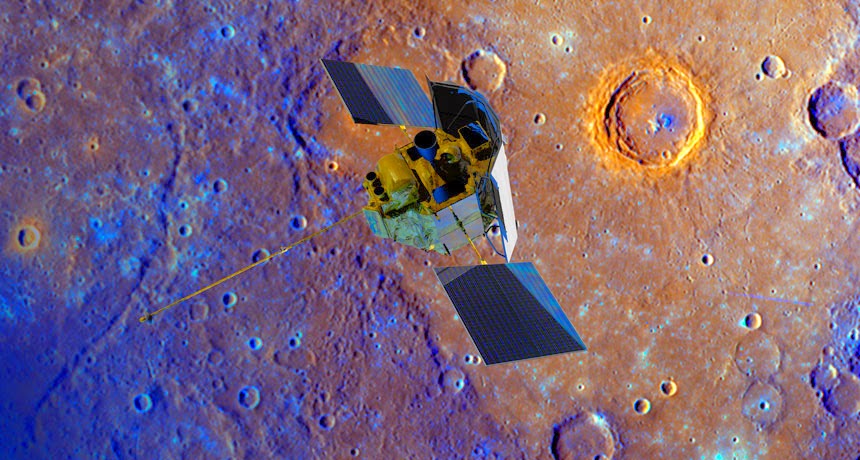
A NASA planetary exploration mission came to a planned, but nonetheless dramatic, end Thursday when it slammed into Mercury’s surface at about 8,750 mph and created a new crater on the planet’s surface.
Mission controllers at the Johns Hopkins University Applied Physics Laboratory (APL) in Laurel, Maryland, have confirmed NASA’s Mercury Surface, Space Environment, GEochemistry, and Ranging (MESSENGER) spacecraft impacted the surface of Mercury, as anticipated, at 3:26 p.m. EDT.
Mission control confirmed end of operations just a few minutes later, at 3:40 p.m., when no signal was detected by NASA’s Deep Space Network (DSN) station in Goldstone, California, at the time the spacecraft would have emerged from behind the planet. This conclusion was independently confirmed by the DSN’s Radio Science team, which also was monitoring for a signal from MESSENGER.
Mission controllers at the Johns Hopkins University Applied Physics Laboratory (APL) in Laurel, Maryland, have confirmed NASA’s Mercury Surface, Space Environment, GEochemistry, and Ranging (MESSENGER) spacecraft impacted the surface of Mercury, as anticipated, at 3:26 p.m. EDT.
Mission control confirmed end of operations just a few minutes later, at 3:40 p.m., when no signal was detected by NASA’s Deep Space Network (DSN) station in Goldstone, California, at the time the spacecraft would have emerged from behind the planet. This conclusion was independently confirmed by the DSN’s Radio Science team, which also was monitoring for a signal from MESSENGER.

“Going out with a bang as it impacts the surface of Mercury, we are celebrating MESSENGER as more than a successful mission,” said John Grunsfeld, associate administrator for NASA’s Science Mission Directorate in Washington. “The MESSENGER mission will continue to provide scientists with a bonanza of new results as we begin the next phase of this mission--analyzing the exciting data already in the archives, and unravelling the mysteries of Mercury.”
Prior to impact, MESSENGER’s mission design team predicted the spacecraft would pass a few miles over a lava-filled basin on the planet before striking the surface and creating a crater estimated to be as wide as 50 feet.
MESSENGER’s lonely demise on the small, scorched planet closest to the sun went unobserved because the probe hit the side of the planet facing away from Earth, so ground-based telescopes were not able to capture the moment of impact. Space-based telescopes also were unable to view the impact, as Mercury’s proximity to the sun would damage optics.
MESSENGER’s last day of real-time flight operations began at 11:15 a.m., with initiation of the final delivery of data and images from Mercury via a 230-foot (70-meter) DSN antenna located in Madrid, Spain. After a planned transition to a 111-foot (34-meter) DSN antenna in California, at 2:40 p.m., mission operators later confirmed the switch to a beacon-only communication signal at 3:04 p.m.
The mood in the Mission Operations Center at APL was both somber and celebratory as team members watched MESSENGER’s telemetry drop out for the last time, after more than four years and 4,105 orbits around Mercury.

“We monitored MESSENGER’s beacon signal for about 20 additional minutes,” said mission operations manager Andy Calloway of APL. “It was strange to think during that time MESSENGER had already impacted, but we could not confirm it immediately due to the vast distance across space between Mercury and Earth.”
MESSENGER was launched on Aug. 3, 2004, and began orbiting Mercury on March 17, 2011. Although it completed its primary science objectives by March 2012, the spacecraft’s mission was extended two times, allowing it to capture images and information about the planet in unprecedented detail.
During a final extension of the mission in March, referred to as XM2, the team began a hover campaign that allowed the spacecraft to operate within a narrow band of altitudes from five to 35 kilometers from the planet’s surface.
On Tuesday, the team successfully executed the last of seven daring orbit correction maneuvers that kept MESSENGER aloft long enough for the spacecraft’s instruments to collect critical information on Mercury’s crustal magnetic anomalies and ice-filled polar craters, among other features. After running out of fuel, and with no way to increase its altitude, MESSENGER was finally unable to resist the sun’s gravitational pull on its orbit.

“Today we bid a fond farewell to one of the most resilient and accomplished spacecraft to ever explore our neighboring planets,” said Sean Solomon, MESSENGER’s principal investigator and director of Columbia University’s Lamont-Doherty Earth Observatory in Palisades, New York. “A resourceful and committed team of engineers, mission operators, scientists, and managers can be extremely proud that the MESSENGER mission has surpassed all expectations and delivered a stunningly long list of discoveries that have changed our views--not only of one of Earth’s sibling planets, but of the entire inner solar system.”
Among its many accomplishments, the MESSENGER mission determined Mercury’s surface composition, revealed its geological history, discovered its internal magnetic field is offset from the planet’s center, and verified its polar deposits are dominantly water ice.
APL built and operated the MESSENGER spacecraft and managed the mission for NASA’s Science Mission Directorate in Washington.
Original Source: www.nasa.gov
Thursday, 30 April 2015
Microsoft Aim's One Billion Devices Running Windows 10 Within Three Years
Entertainment
,
News
,
Reviews
,
Technology

Windows 10 on One Billion Devices
Today we shared our bold goal –to see Windows 10 on one billion devices within two to three years of Windows 10’s availability – the first platform version, in any ecosystem, to be available on one billion devices. We will accomplish this by delivering Windows 10 with a free upgrade offer, making it easy for customers and businesses to upgrade quickly, and with great new devices (which we haven’t discussed yet ).
Windows Store for Consumers, Businesses, and Developers
Today, we shared more details on what the Windows Store will offer to end-users, businesses, and developers. Developers will be able to write an application once and distribute it to the entire Windows 10 device family, making discovery, purchasing and updating easy for customers.
For end-users, apps in the Windows Store will install and uninstall easily, and the Store will support a range of global payment methods on all Windows devices – including the largest carrier billing footprint of any ecosystem, supporting 90 carriers, to help people around the world who don’t have credit cards, but do have phones.
For businesses, the Windows Store enables admins to highlight apps for their employees, distribute select apps from the Windows Store and private line-of-business apps to their employees, and use business payment methods like purchase orders.
For developers, we announced several new capabilities coming to Windows 10:
- Carrier billing across all Windows 10 devices, which from our phone experience, increases purchases in emerging markets by 8x
- Updated Windows 10 Microsoft Advertising SDK with support for video ads and install tracking.
- In-app purchase subscription support.
- New Windows Store Affiliate Program
Universal Windows Platform Innovation
With the Universal Windows Platform, developers can now create a single application for the full range of Windows 10 devices. The platform’s UX controls automatically adapt to different screen sizes, and the developer can then tailor applications to unique capabilities of each device. The platform enables developers to integrate Cortana and Xbox Live into their applications, offer trusted commerce, embrace natural user input, create holograms, and more.
The Universal Windows Platform enables Continuum. Previously, we’ve demonstrated how Universal Windows apps and the Windows shell transition seamlessly between tablet and PC modes. Today, we showed how Universal Windows apps and Continuum for phones enables a screen to become like a PC.*

The Universal Windows Platform enables applications to become holograms. Today we shared our progress over the last 100 days since announcing Microsoft HoloLens – the world’s first, and only, fully untethered holographic computer powered by Windows 10. Today, we shared how HoloLens is helping Trimble and its customers visualize building designs in the context of real world objects and landscapes, giving them the ability to walk around designs while clients view them remotely and see street side how a building is going to look. And how medical students at Case Western Reserve University and Cleveland Clinic learn procedures without ever picking up a scalpel!
Many partners are building amazing apps on the Universal Windows Platform. Today, we demoed USA Today and WeChat. Other partners onboard include Disney, Netflix, and King to name just a few.
Welcoming Developers to Windows 10
Today, I had the honor of speaking to thousands of our development partners at the Build conference about our plans to make Windows 10 the most attractive development platform ever. It is always thrilling to see so many developers excited about Microsoft – and this year, about Windows 10. If you weren’t able to attend or watch it live, you can watch the keynote here later this afternoon once it’s posted.
Windows 10 on One Billion Devices
Today we shared our bold goal –to see Windows 10 on one billion devices within two to three years of Windows 10’s availability – the first platform version, in any ecosystem, to be available on one billion devices. We will accomplish this by delivering Windows 10 with a free upgrade offer, making it easy for customers and businesses to upgrade quickly, and with great new devices (which we haven’t discussed yet ).
Windows Store for Consumers, Businesses, and Developers
Today, we shared more details on what the Windows Store will offer to end-users, businesses, and developers. Developers will be able to write an application once and distribute it to the entire Windows 10 device family, making discovery, purchasing and updating easy for customers.
For end-users, apps in the Windows Store will install and uninstall easily, and the Store will support a range of global payment methods on all Windows devices – including the largest carrier billing footprint of any ecosystem, supporting 90 carriers, to help people around the world who don’t have credit cards, but do have phones.
For businesses, the Windows Store enables admins to highlight apps for their employees, distribute select apps from the Windows Store and private line-of-business apps to their employees, and use business payment methods like purchase orders.
For developers, we announced several new capabilities coming to Windows 10:
Carrier billing across all Windows 10 devices, which from our phone experience, increases purchases in emerging markets by 8x
Updated Windows 10 Microsoft Advertising SDK with support for video ads and install tracking
In-app purchase subscription support
New Windows Store Affiliate Program
Universal Windows Platform Innovation
With the Universal Windows Platform, developers can now create a single application for the full range of Windows 10 devices. The platform’s UX controls automatically adapt to different screen sizes, and the developer can then tailor applications to unique capabilities of each device. The platform enables developers to integrate Cortana and Xbox Live into their applications, offer trusted commerce, embrace natural user input, create holograms, and more.
The Universal Windows Platform enables Continuum. Previously, we’ve demonstrated how Universal Windows apps and the Windows shell transition seamlessly between tablet and PC modes. Today, we showed how Universal Windows apps and Continuum for phones enables a screen to become like a PC.*
The Universal Windows Platform enables applications to become holograms. Today we shared our progress over the last 100 days since announcing Microsoft HoloLens – the world’s first, and only, fully untethered holographic computer powered by Windows 10. Today, we shared how HoloLens is helping Trimble and its customers visualize building designs in the context of real world objects and landscapes, giving them the ability to walk around designs while clients view them remotely and see street side how a building is going to look. And how medical students at Case Western Reserve University and Cleveland Clinic learn procedures without ever picking up a scalpel!
Many partners are building amazing apps on the Universal Windows Platform. Today, we demoed USA Today and WeChat. Other partners onboard include Disney, Netflix, and King to name just a few.

Windows 10 Welcomes All Developers and Their Code
Windows has always embraced a variety of technologies to build apps. At Build last year, we detailed our support for open source and popular middleware partners, open sourced .NET, and announced native Cordova support in Visual Studio.
Today, we announced four new SDKs, enabling developers to start with an existing code base, integrate with the Universal Windows Platform capabilities, and then distribute their new application through the Windows Store to the one billion Windows 10 devices. The code bases enabled by these SDKs are:
- Web sites
- .NET and Win32
- Android Java/C++
- iOS Objective C
Today, we announced that Adobe will bring their Photoshop Elements and Premier Elements apps to the Windows Store, leveraging the new SDK for Win32 applications. We look forward to more of the current 16 million Win32 applications growing their distribution through the Windows Store.
Today, we also shared that King has already used the Objective C SDK to bring Candy Crush Saga to Windows Phone. The app came to market quickly with very few code modifications, and has earned a 4.5 average rating.

Microsoft Edge
Today we announced the name of our new browser, Microsoft Edge. We chose the name Microsoft Edge as it reflects our commitment to developers to deliver a browser that lives at the edge of modern web standards and security. Microsoft Edge is a browser built for doing, with built-in note taking and sharing; a reading pane for no distractions; and integration with Cortana. We showcased how Microsoft Edge will offer developers better discoverability of their apps and our plans for future extensibility with JavaScript and HTML. You can see more about Microsoft Edge in this video.
Begin Developing Today!
We’re excited that we’re well on our way to making Windows 10 available this summer. Most of the features that we have shared today will be available at launch; others will roll out later this year. The beauty of launching Windows 10 as a service means we can deliver new technology as soon as it is ready.
New tools for Universal Windows app development will be available later today at this location. I welcome you to join the Windows Insider Program to get the latest tech previews of Windows 10 as they become available, including the latest build for PCs, which will also be available later today.
Original Source: www.microsoft.com
Sunday, 19 April 2015
25 Most Beautiful Stones Ever Found On The Planet.
Entertainment
,
Facts
,
News
,
Technology
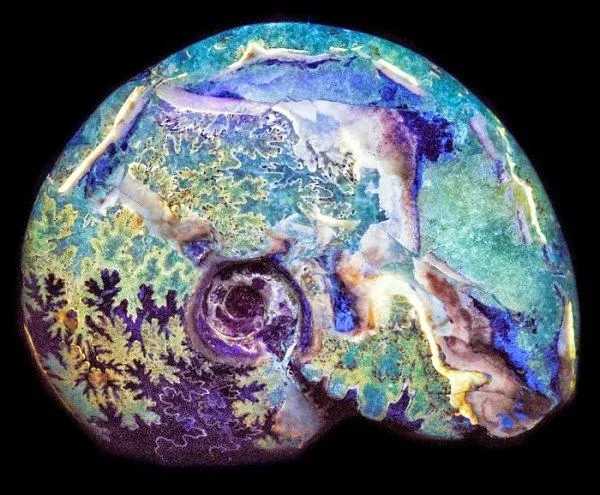
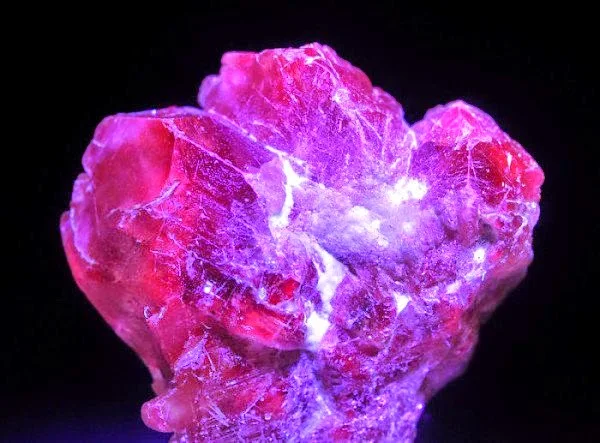
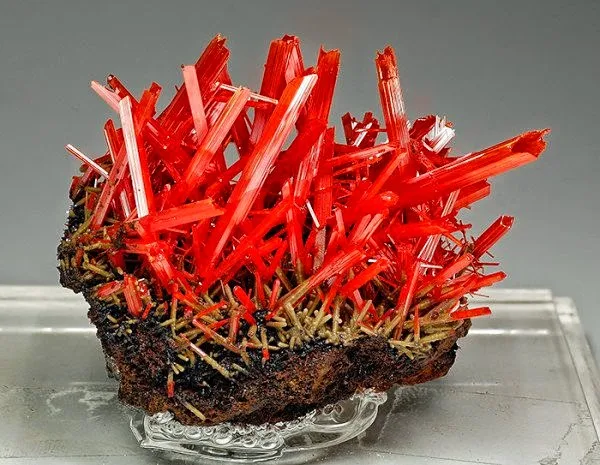
These 25 pictures of the most rarest and extremely beautiful stones ever found on the planet, will be a feast to your eyes! These pictures comes to show us how incredibly beautiful our nature is. Enjoy the glory of nature by looking at these most beautiful stones!






1. BismuthRockstone

2. Sunset Fire Opal

3. Opalised Ammonite

4. Fukang Meteorite

5. Bismuth

6. Blue Agate Geode

7. Botswana Agate

8. Carneole

9. Chrysocolla In Malachite

10. Alexandrite

11. Fluorite

12. Luz Opal With Galaxy Inside

13. Lightning Ridge Black Opal

14. Opal Fossil

15. Rhodochrosite

16. Titanium Quartz

17. Obsidian

18.Uvarovite

19. Purple Geode Druzy Stone

20. Multicolor Rutile Crystal

21. Burmese Tourmaline

22. The Empress Of Uruguay

23. Rose Quartz Geode

24. Cobaltocalcite

25. Crocoite

Image Source: www.google.co.in/Images
Wednesday, 15 April 2015
8 Things That Explain Why We Need To Support Net Neutrality
News
,
Scam
,
Technology
India wants net neutrality and we need to take back the internet from all those cash hungry telecom giants like Airtel and Vodafone. Net Neutrality is basic need for internet users. If Net neutrality fails in India then you might end up buying packages to access different internet apps. For example, Youtube will cost you Rs 200/1 GB, WhatsApp – Rs 500/1 GB, and other Apps – Rs 100/GB. Charges of those apps which are must will be increased by telecom operators because they want to earn more.
India wants Net Neutrality!
To support net neutrality, log on to www.savetheinternet.in and make your voices heard to the people over at TRAI. Just follow the steps as instructed over the website and spread the message as far as you can. Only few days more to go, the last date is 24th April 2015.
Don’t forget to share this article.
1

2

3

4

5

6

7

8

Image Source: Artoholic Design
Note: Don't Forget To Share This Article. Also Do Comment Your Views Below.
Subscribe to:
Posts
(
Atom
)


